

How Much Do Americans Spend On Mental Health Services
Americans' Mental Health and Personal Spending Written report 2020
Data & Guides  Coin Americans' Mental Health and Personal Spending Report 2020
Figures from the National Institute of Mental Health show that roughly 1 in 5 Americans suffer from some class of mental wellness issues, this number rises to over a quarter in those aged 18-25. Many suffer silently, therefore the figure could sadly be vastly higher.
In the The states, mental health accounts for 5.5% of wellness spending. We wanted to learn what individuals spend on mental wellbeing for themselves, and what people prioritize their spending on to stay healthy, both directly and indirectly.
The following are some of the cardinal statistics nosotros uncovered from our enquiry of 1,066 Americans. Total findings can be found beneath.
Key Statistics on Mental Wellbeing and Finances
- People are spending an average of $287 per month on their mental health
- Nigh a quarter use booze as a way to assist their mental wellness
- 52% say Netflix and Disney+ are key to looking after their mental health
- 43% say they use nutrient as a way to improve their mental health
- iii in 4 Americans emotionally spend in some class
- The average emotional spend purchase is $114
- A quarter avoid looking at bank statements due to mental wellbeing fears
- Over half take suffered anxiety due to coin worries
- A 3rd of people have insomnia episodes due to money worries
- People stated they would need to earn a $51,111 salary to experience happy, $2,439 more than the national average salary
COVID-19 and Fiscal Mental Wellbeing
Contents
- Over half say their financial situation during COVID-xix has caused their mental health to get 'worse' or 'much worse'
- xviii% say Disney+ and Netflix were the most of import things during lockdown for their mental wellness
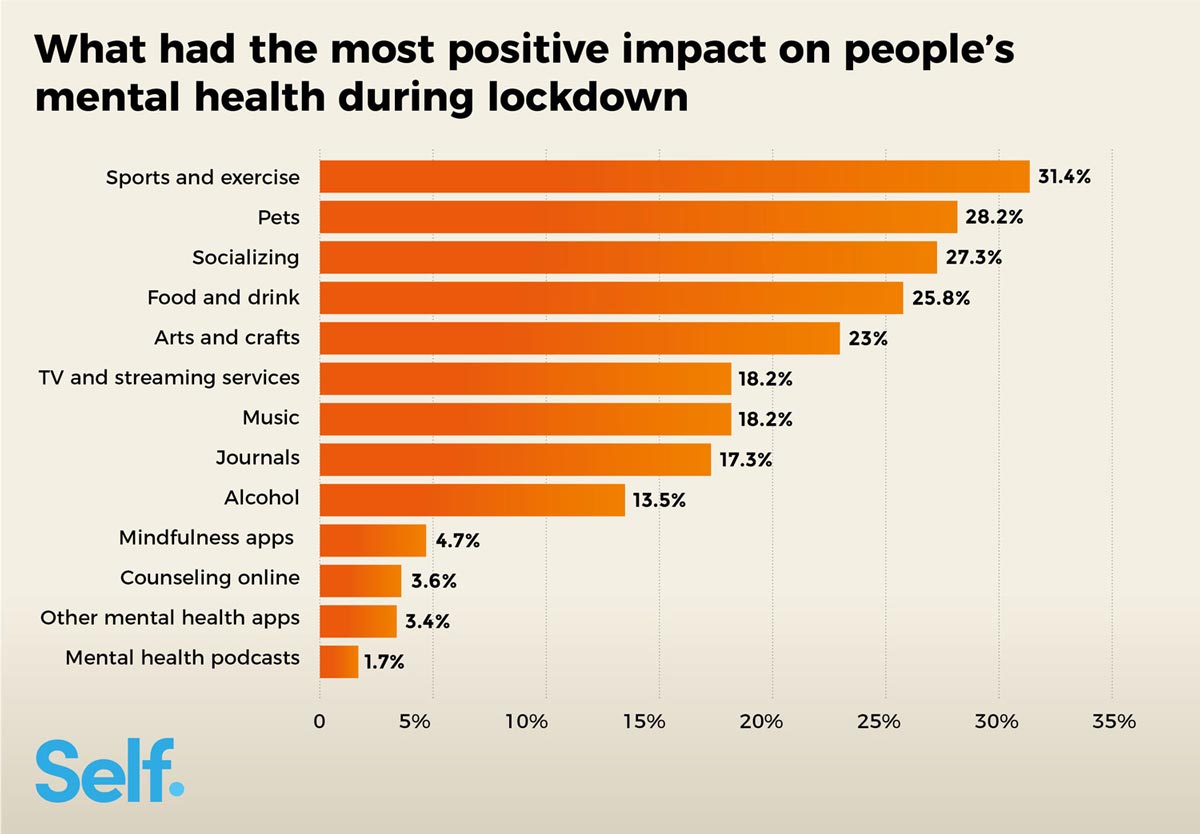
- 31% claim sports and exercise were the most important things during lockdown for their mental health
- Average person spent $110 on tech to improve wellbeing during COVID-19
- 2 in three are allocating a split up fund for celebrating the end of COVID-19, averaging $264.79
- iv in v claim their mental wellness will definitely better after COVID-19
Direct cost of mental health
Nosotros asked our respondents to discuss the amount they spend on direct and indirect methods that help with their mental health. The following is a breakup of which directly methods people have used to meliorate their mental wellbeing:
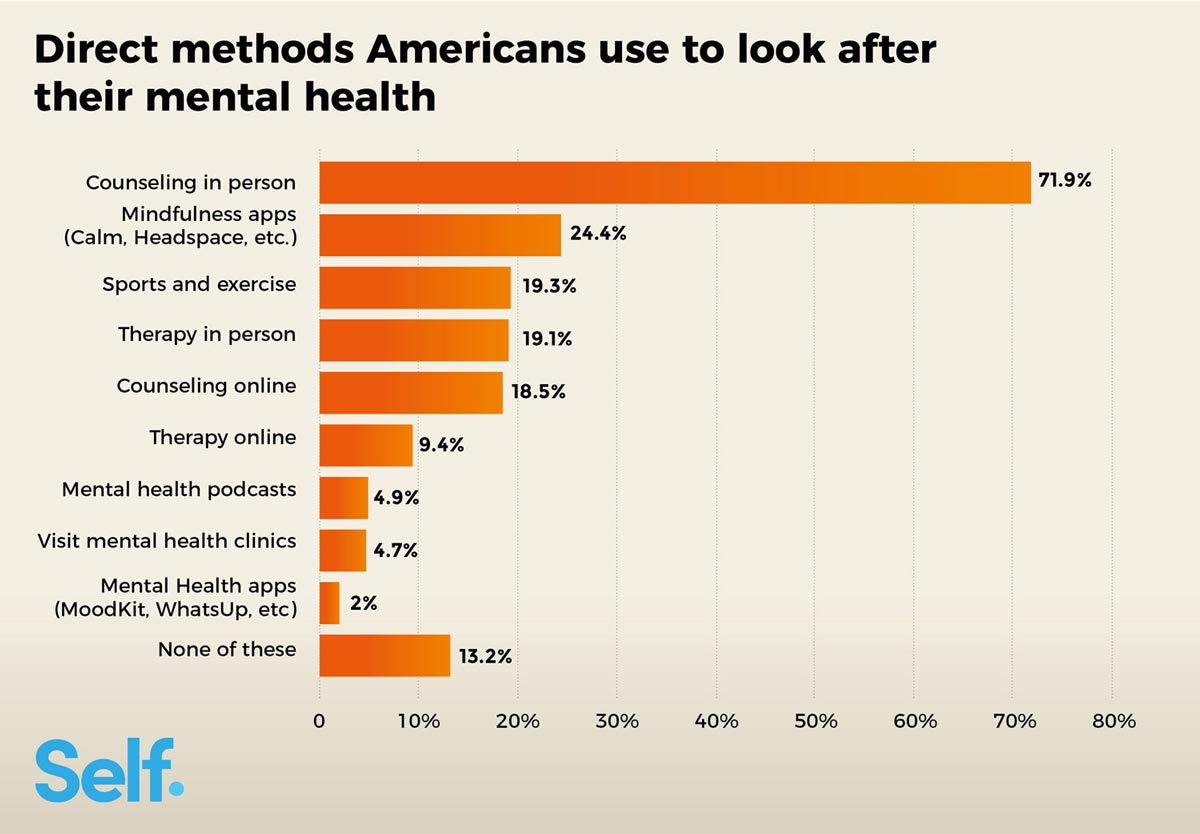
The majority (71.nine%) had tried counseling at some point, with virtually a quarter (24.4%) using mindfulness apps to improve their mental health through things like guided meditation and cocky reflection alongside a range of techniques. The average amount spent on these apps was plant to be $7.30 per month, with apps like Headspace costing $13 a month, and Calm at $half-dozen/month. These apps are gaining popularity each year, with Calm releasing a viral collaboration with One Direction's Harry Styles in the middle of 2020.
Respondents also revealed that the average amount spent each month on therapy and/or counseling, was $147.seventy. When asked how much was spent on physical wellbeing each month, the boilerplate amount was found to be $103.10, accounting for things similar gym memberships, supplements and personal trainers.
Indirect toll of mental wellness
While doctors recommend therapy, counseling and exercise, many find their mental wellness improves with various 'indirect' methods. We asked our console which methods they used for the goal of assisting their mental health. The following is what nosotros found:
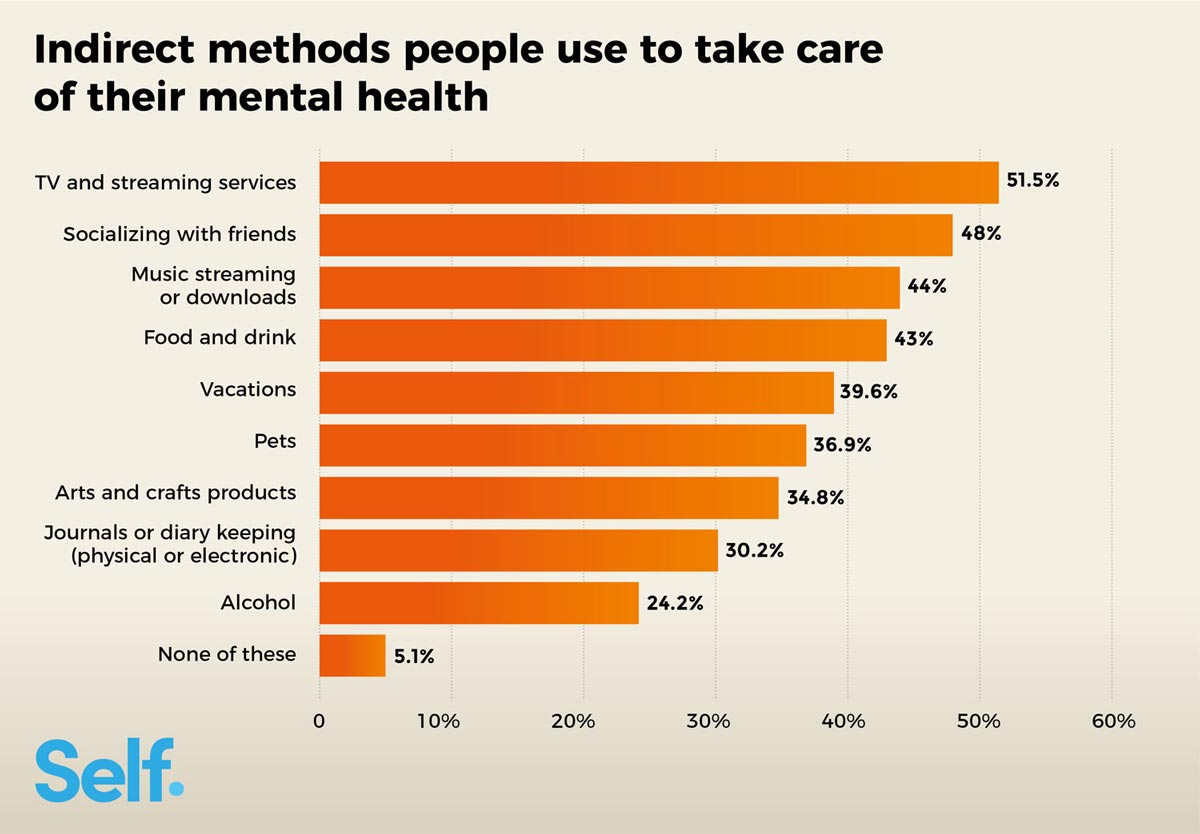
Cable Television and streaming services like Netflix and Disney+ are the most used (51.6%) indirect method to have care of mental wellness, followed by socializing with friends (48%) and music (44%). While booze may take the smallest majority, it still amounts to a quarter of respondents stating they use booze as a ways of helping with their mental health.
When asked how much people spend on average for these indirect items, respondents stated $132.60 on average. This was separate to the $1074.xc average that respondents claimed they spend on vacations. This average toll hither should exist understood equally whatsoever vacation length, for example, a long weekend or a full week away could be at either stop of the calibration.
Taking intendance of your mental wellness costs $287 a calendar month
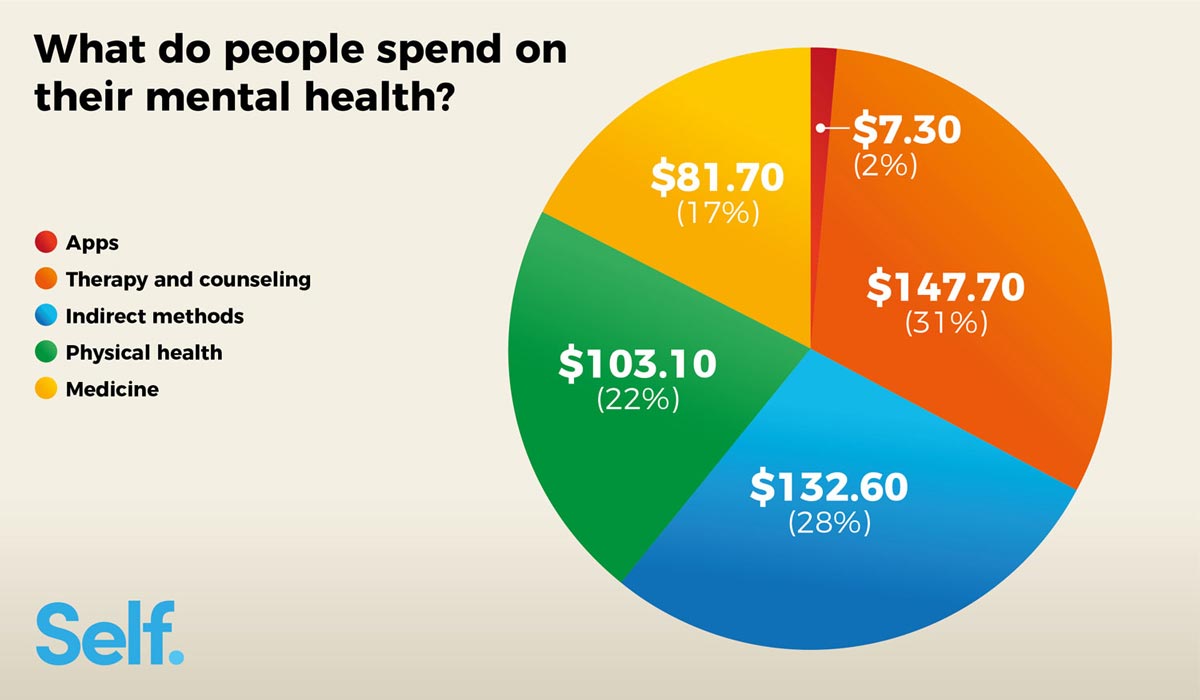
Where did this figure come from? The boilerplate of $287 a calendar month is made upwardly of a mix of spending on things that direct touch your mental health and indirectly improve your wellbeing according to our respondents.
This is not inclusive of monthly medicine bills ($81.70) or physical wellness payments, similar gym memberships, exercise gear, or supplements, for example ($103.10).
If you were to add together direct costs, indirect costs, physical wellness and medicinal costs, the monthly spend on mental health for the boilerplate of American could be anywhere up to $471.eighty.
The below chart shows the upkeep split for someone who engaged with all aspects of mental health spending:
The cost of therapy
With Americans spending virtually $150 per month on therapy or counseling, nosotros wanted to detect out how this fits into a wider public understanding of therapy. We asked our respondents if therapy was cheaper, would they pay for it and undertake therapy sessions on a regular basis. iii in five said that they would, indicating there is the desire for such services simply typically high prices put people off from prioritizing their mental health.
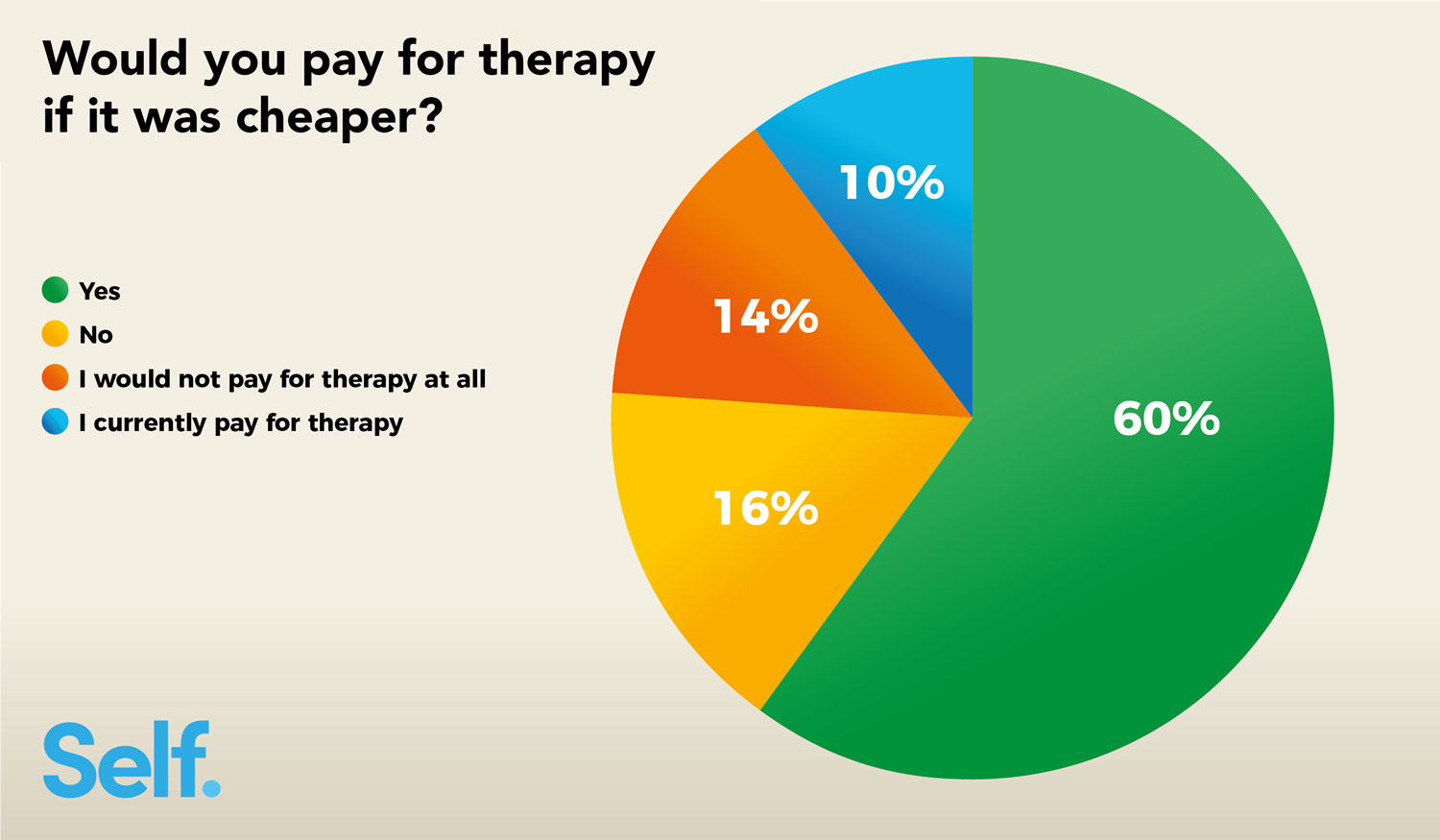
Of those who would, or already utilise therapy, at that place was an agreement that i hr of therapy is worth around $lx from over 1,000 responses. Research suggests that therapy is on average, $75-$150 an hour across the U.s.a.. With that in mind, therapists with lower rates may not be as out of reach to the average consumer as many may call up. With reduced costs of online therapy providers, which only 9% of our respondents said they had tried, there may be an option hither many are not enlightened of.
Emotional spending statistics
Emotional spending can take various forms, but it generally tends to be when we are feeling stressed or unhappy and we buy things we don't need or even want.
We asked our respondents if they engage in any habits which would fall under the spectrum of emotional spending to discover how often people'south feelings intertwine with their financial wellbeing.
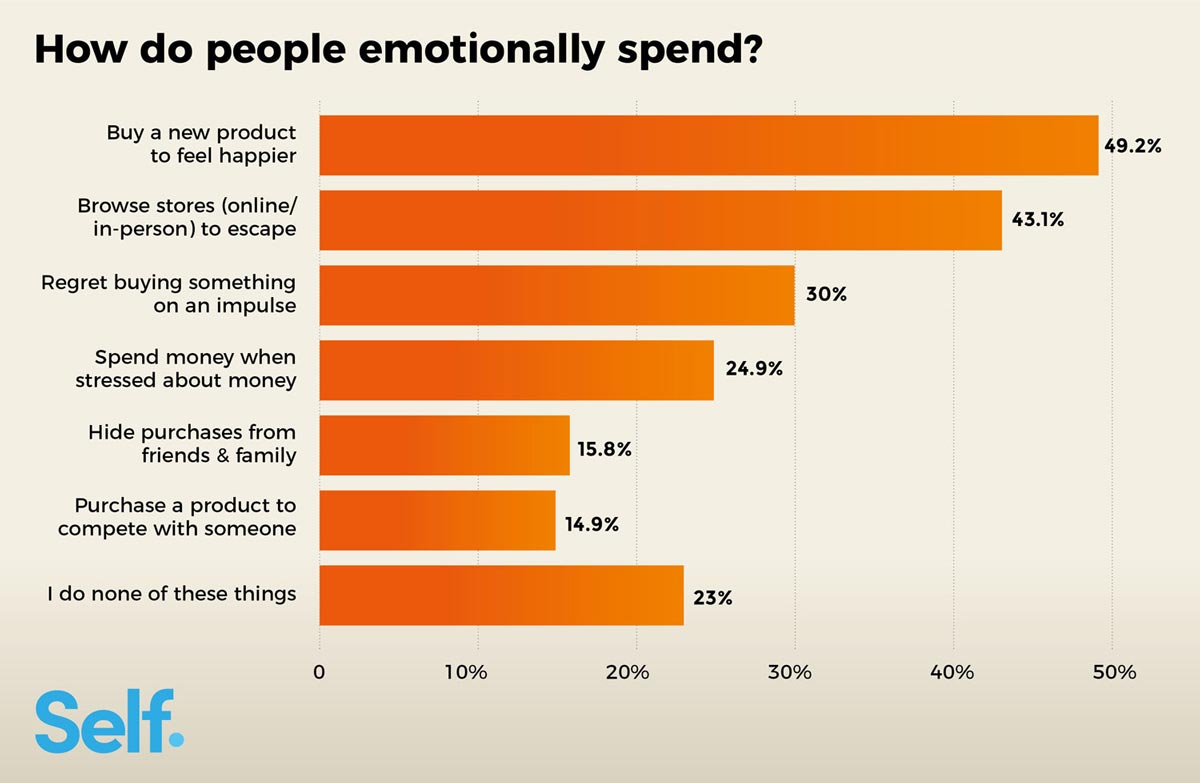
77% of our respondents said they emotionally spend in some chapters, with the bulk (49%) saying they buy products they don't demand purely to feel happier. The second most frequent (43.i%) behavior associated with emotional spending was browsing stores as a ways of escapism, followed by feelings of regret on impulse purchases (30%). Emotional spending can take other forms, but these are some of the almost common.
When asked how much people spend on purchases of this blazon, we found the average was $114.32. If the boilerplate person emotionally spent once a week, this would amount to just under $6,000 each year!
Financial stress and mental health
People have their own ways of dealing with finances in a bid to ensure they take intendance of their mental health. Naturally, this tin take a variety of forms. We took some of the nearly popular mechanisms consumers use to manage their financial wellbeing and asked our respondents which they apply regularly.
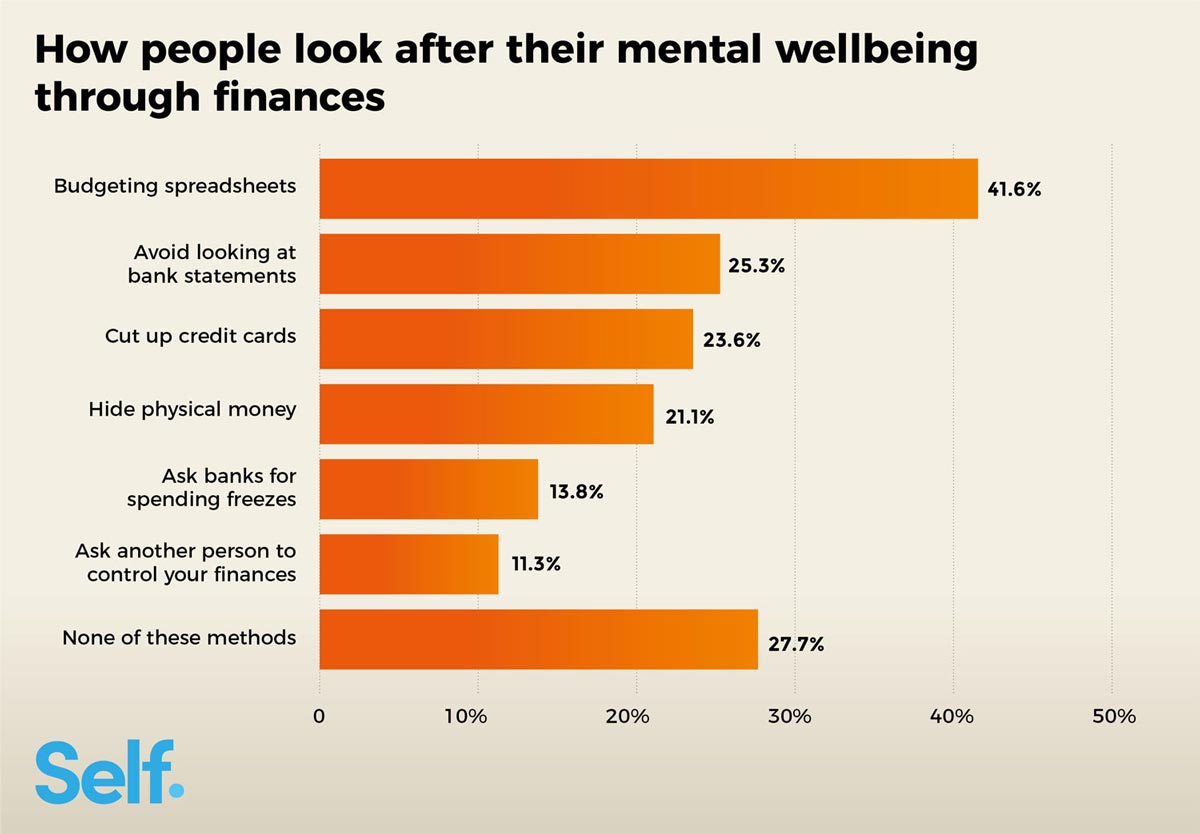
Overall, the well-nigh simple and effective method was the almost popular, with 41.6% of people using budgeting spreadsheets to assist with their mental health. This was followed by a quarter of people fugitive looking at banking concern statements, and 23.6% cutting up their credit cards to forbid them from spending on them. Over i in v choose to hide notes and coins abroad in a bid to forget near them and save.
Our Accredited Financial Counselor, Lauren Bringle Jackson, has the post-obit three tips people should utilise to observe some small means to improve their financial wellbeing.
-
Recruit a community to encourage and hold you accountable along the style when tackling your debt head on. But like you might have a more than successful physical fitness journey if yous have a workout buddy, or a more successful mental wellness journey with the support of a counselor, you'll probably have a more successful fiscal wellness journey with the support and guidance of others besides.
-
Make a list of concluding month's expenses. Separate that list into needs, similar food, shelter and basic transportation, and wants, like subscriptions, eating out, etc. Wait over everything on your "wants" list and notice if annihilation surprises yous, and if you lot're spending coin on things yous don't truly desire or need.
-
When it comes to saving money on food, the best place to offset grocery shopping is in your pantry at home. People generally have much more food shoved in the back of the pantry than they realize. By getting artistic with what you already take, and Googling some recipes based on those ingredients, you might exist surprised how much longer you lot tin expect until you demand to get to the grocery store.
Mental health bug due to finances
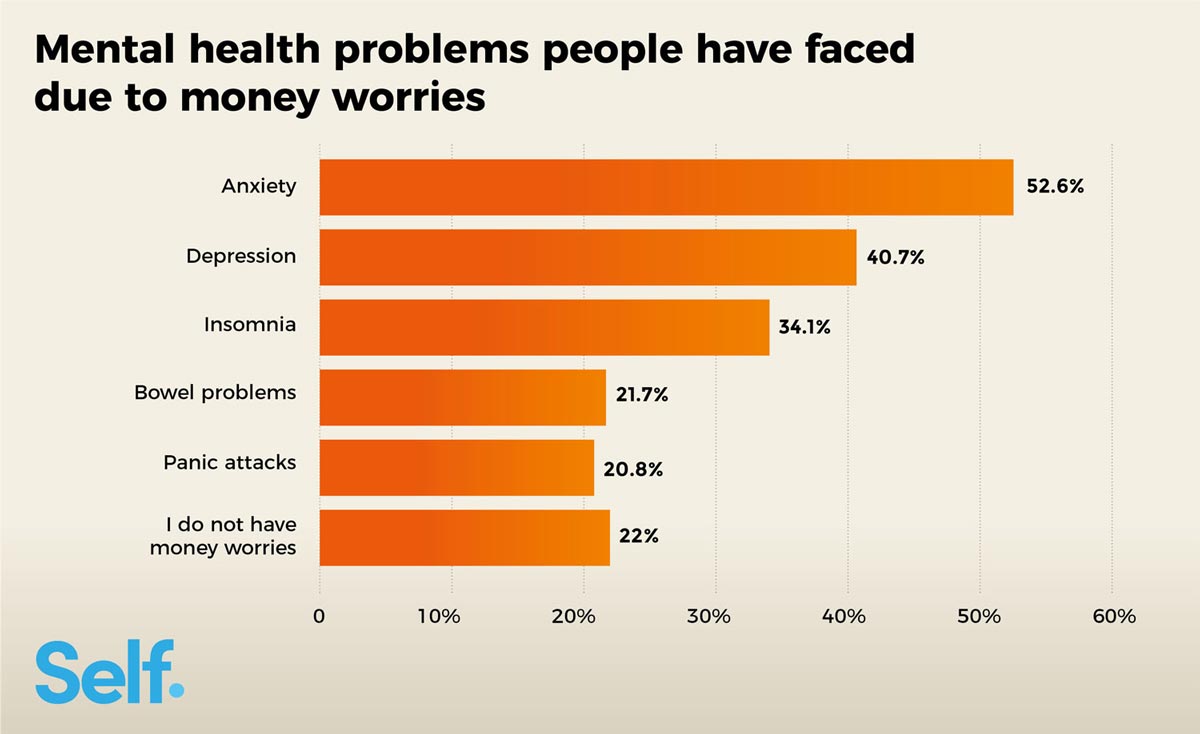
Over ane in 5 (22%) said they practise not face money worries, but for the majority who do, there are potential wellness bug. Over half (52.6%) said they face anxiety due to financial stress, with 2 in five (forty.7%) saying they accept faced depression, and over a third (34.1%) accept struggled with insomnia as a direct result of money worries. The full results can exist establish in the chart below.
How much money makes you happy?
Alongside this, we asked all of our respondents how much they would demand to earn personally, to be mentally and financially comfy. Anybody's position is going to be unique across the US, however, nosotros discovered that the boilerplate person would need to earn $51,111 to 'be comfy and mentally positive'. According to the Bureau for Labor Statistics, the boilerplate American earns $48,672, indicating the majority don't earn enough to accommodate the needs of their mental wellness.
Wellbeing, finances, and COVID-xix
Whilst we asked our respondents to consider previous questions in relation to their life pre-pandemic, nosotros also wanted to assess the bear upon coronavirus has had on their fiscal and mental wellbeing. Over one-half (52.5%) said their mental wellness had got 'worse' or 'much worse' due to COVID-19's affect on their finances. On the other hand, 1 in 10 (10.7%) said their mental health had improved in some fashion due to their current financial situation.
Nosotros asked our respondents if they had spent whatsoever money during lockdown, purely for purchases to improve their mental health. Only 1 in iii (32.8%) said they had washed this, and of this group, the boilerplate amount spent to better their mental wellbeing during the pandemic was $98.29.
What improved mental health during lockdown?
We asked our respondents to choose from a range of straight and indirect methods to improve mental wellbeing and state which had the largest positive impact during lockdown. Sports and exercise became the largest contributor to looking afterwards mental health, followed by pets and socializing. thirteen% of respondents said that alcohol was 1 of the biggest reasons for mental health improvement during the self isolation menstruum.
The Zoom revolution
Zoom quizzes were a huge part of lockdown around the world. Video calling has boomed allowing friends and families to socialize whilst isolating. With this in mind, and how 27% of our respondents said that socializing had ane of the biggest impacts on their mental wellbeing during lockdown, we asked how much people had spent on engineering science to enable them to become involved in the Zoom revolution. Of the xxx% that said they did spend money on video conferencing tech, the average spend was $109.82.
Life after lockdown
81.three% of people said that their mental health volition definitely improve after the pandemic is over. With that, we asked if people were saving money for a defended mail-pandemic celebration fund: 2 out 3 (68%) were. When asked how much this group was planning on spending to celebrate the end of coronavirus, the boilerplate full came to $264.79.
Demographic breakdown
1,066 Americans from across the states, with a range of fiscal backgrounds, were polled using Amazon's survey platform from 29th June to 4th July on a range of questions about their financial and mental wellbeing. The total breakdown of respondents is discussed below.
When asked what gender our respondents identified as, the breakdown was as follows:
- Female (53.two%)
- Male (46.5%)
- Other (0.three%)
Respondents were made upwardly of a range of ages from xviii-65+, the full breakdown is as follows:
- 18-24 (12.38%)
- 25-34 (38.09%)
- 35-44 (25.52%)
- 45-54 (14.17%)
- 55-64 (half-dozen.19%)
- 65+ (iii.66%)
The following is a breakdown of the financial status of our respondents' households.
- $0-$9,999 (10.half-dozen%)
- $x,000-$19,999 (11.82%)
- $20,000-$29,999 (13.41%)
- $xxx,000-$39,999 (12.29%)
- $40,000-$49,999 (11.097%)
- $50,000-$59,999 (11.82%)
- $60,000-$69,999 (5.53%)
- $70,000-$79,999 (ix.47%)
- $eighty,000-$89,000 (v.sixteen%)
- $90,000 or more (8.82%)

How Much Do Americans Spend On Mental Health Services,
Source: https://www.self.inc/info/mental-health-personal-spending-report/
Posted by: baxterfortits64.blogspot.com
0 Response to "How Much Do Americans Spend On Mental Health Services"
Post a Comment