

Which Of The Following Is An Example Of A Special Request In Advance Of Service Delivery?
Main Torso
Chapter 9. Customer Service
Ray Freeman and Kelley Glazer
- Explain the importance of customer service
- Describe the characteristics of infrequent customer service and its benefits
- Explicate how the quality of client service differentiates a destination
- Describe how to recover from service failure
- Explain how social media impacts customer service commitment
Overview
In the tourism and hospitality industry, the success or failure of our businesses and destinations depends on service. Some, all the same, evangelize consistently higher levels of customer service. Why and how are they able to do this? This chapter will try to answer these questions as we explore the fundamentals of customer service in the context of a competitive global tourism surroundings.

Customer Service as Function of BC's Tourism Marketing Plan
Many credit Expo 86, and the preparation that began the previous year under the SuperHost banner, with bringing this important topic to the forefront of BC's tourism industry.
Take a Closer Await: The SuperNews
Back in the days of Expo 86, it seemed everyone in the industry had a vested interest in improving their customer service skills. Take a look at the first edition of the SuperNews, a newsletter for industry professionals that shared the highlights of training received by taxi drivers and at local colleges, and offered name tags for people to encourage customers to "Expect the Most: SuperHost." Read a copy of the SuperNews [PDF]: www.worldhosttraining.com/documents/SuperNews_Vol1_No1.pdf
Customer service remains an integral part of delivering on BC's tourism marketing promises to our guests. Destination BC recently launched its Remarkable Experiences program, intended to differentiate the province every bit a destination in a global marketplace filled with competitors. Successful execution of this strategy will depend on how well employers and their staff provide quality customer service, focusing on the importance of the "homo element" in the visitor experience (Destination BC, 2014). And beyond the country, the Canadian Tourism Commission (CTC) is encouraging the development of Canadian Signature Experiences, made all the more memorable because of the high-quality guest interactions they emphasize (Canadian Tourism Commission, n.d.).
A Primal Result for Employers

In a 2010 Tourism Vancouver Isle training and education needs cess survey, employers and managers indicated that client service skills were one of the virtually significant issues (Tourism Vancouver Island, 2010). Employers and human resources managers were most concerned with employee skills and training related to personal development, tourism/hospitality cognition, computer and communication skills, leadership/direction skills, and client service skills and attitudes.
A like finding emerged from a 2014 LinkBC roundtable discussion held between tourism and hospitality educators and industry professionals. One of the chief topics raised past employers was the demand for new tourism professionals to larn customer service skills and to proceed to hone these over time. In all groups, across all sectors, many students and graduates were found lacking in these skills (LinkBC, 2014).
For this reason, an entire chapter has been dedicated to exploring customer service issues, including quality of client service, key challenges and benefits to employers and employees, the concept of customer orientation, and ways to recover when service interactions go wrong.
Quality of Customer Service
Quality client service is an experience of feeling valued or heard. Sometimes it's an intangible component of why a guest may prefer i tourism or hospitality provider over another. There is something about quality customer service that you oftentimes can't put your finger on — but yous know it's in that location. And information technology's a critical gene for tourism success, both equally a ways of satisfying ever-increasing customer expectations, and every bit a way to achieve business profitability (Erdly & Kesterson-Townes, 2002).
In 2012, Cornell Hospitality presented a report from PKF Hospitality Research that showed guest satisfaction is heavily influenced by service factors such as employee attitude and the pacing and lodge of services provided. It found that the greater the client satisfaction, the higher the revenues for a given hospitality business concern, and that service plays a far greater role than price and location in the guest-purchase decision (Cornell Hospitality Research, 2012).
Grooming is critical to ensuring quality service and meeting these objectives (Brown et al., 2009). On a global calibration, Canada ranks high in human resources capabilities. Unfortunately, due to the seasonal nature of many tourism and hospitality positions, and limited access to affordable and attainable training, the industry isn't always able to take advantage of this position (Blanke & Chiesa, 2009), as it can exist difficult to attract, railroad train, and retain reliable and qualified staff twelvemonth-round.
Spotlight On: The Canadian Tourism Human being Resources Council
In Canada, the Canadian Tourism Human Resource Commission (CTHRC) offers the national emerit training program. Certification from emerit recognizes an individual's competence in his or her occupation as measured against the National Occupational Standards. Professional person certification is bachelor for dozens of frontline and supervisory occupations, providing a marketable credential for those just starting out in the tourism industry and for seasoned veterans. For more data, visit the Canadian Tourism Human Resources Committee: http://emerit.ca/home
The concept of total quality (TQ) refers to an arroyo by businesses to integrate all employees, from management to front-level, in a process of continuous learning, with a goal of increasing customer satisfaction. It involves examining all encounters and points of interaction with guests to identify points of improvement. Total quality management (TQM) in tourism and hospitality is a process where service expectations are created by the unabridged team, with a collaborative arroyo between direction and employees (Kapiki, 2012).
Key Challenges and Benefits to Employers
Many employers struggle to justify the fourth dimension and expense associated with training, particularly in a seasonal workplace or environment with high staff turnover (Saunders, 2009). In fact, many of the benefits of training are intangible and therefore difficult to measure, although there is testify that the return-on-investment of training is quite high. For case, employee competence and job satisfaction are not always easily assessed, simply tin can improve productivity and organizational profitability.
Have a Closer Look: World Travel and Tourism Quango Global Talent Trends and Problems Report
The World Travel and Tourism Council's report on trends in tourism employment speaks to the importance of hiring and training service tourism and travel staff who tin deliver quality experiences as part of the tourism supply chain. It lists a strong customer service base of operations equally the top requirement for staff in tourism and hospitality businesses. To read the report, visit Global Talent Trends and Bug for the Travel and Tourism Sector [PDF]: http://www.wttc.org/-/media/382bb1e90c374262bc951226a6618201.ashx
Employers practise need to sympathize the positive impacts of training on their bottom line. Central benefits may include improved employee attraction/recruitment, retention, appointment, and innovation. Saunders (2009) suggests that to exist most effective, training should be oriented to develop employee potential versus addressing deficiencies.
Benefits to Employees

Client service preparation provides employees with a foundation for effective service delivery. Potential benefits of this preparation may include improved skills and attitudes; meliorate communication skills; better understanding of workplace practices; increased morale, confidence, self-satisfaction, and work satisfaction; increased participation; greater chore/career advancement potential; greater interest in and willingness to participate in further training; and more independence (Grey, 2006).
As employees acquire certifications and credentials, and these are recognized by employers, both groups do good. Employees have a tangible way of demonstrating mastery of service knowledge and skills, and employers have tools to assist with the recruitment and screening of potential staff.
Spotlight On: WorldHost Preparation Services
WorldHost Training Services, a segmentation of Destination BC, offers internationally recognized training solutions to see the needs of the tourism industry. A variety of client training products are available, from self-directed online courses to customized training programs. Recently, WorldHost Training Services introduced a serial of online courses entitled Remarkable Service in the Historic period of Social Media. For more information, visit Globe Host Training: www.WorldHostTraining.com
According to Kim (2008), customer-oriented interactions betwixt consumers and tourism employees influence the quality of the tourism experience. Let's take a closer expect at the concept of customer orientation and what this ways in today's tourism businesses.
Customer Orientation
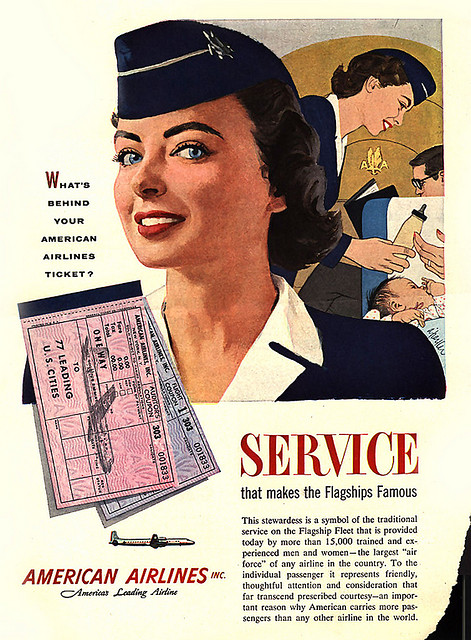
Kim defines customer orientation "as the set of activities, behaviours, and beliefs that place high priority on customers' interests and continuously create superior customer value" (2008, p. 195). Even when employees take positive attributes, it may not be enough to ensure positive customer engagements unless they are specifically trained toward client orientation (Kim, 2008).
Spotlight On: WorldHost Hall of Fame
The WorldHost Customer Service Laurels is presented at the almanac British Columbia Tourism Manufacture Briefing to an private who exemplifies going the "extra mile." Read the inspiring stories of those who have demonstrated leadership, professionalism, and a service approach that has made them recipients of this prestigious distinction: WorldHost Hall of Fame: www.worldhosttraining.com/halloffame/
Customer Service and Competition: The Customer-Oriented Organisation
Co-ordinate to Masberg and colleagues, "to the customer, just service may distinguish a business from its competition" (Masberg, Chase, & Madlem, 2003, p. nineteen). While specific client service jobs require dissimilar skills, building an overall customer-oriented organization may better see customer expectations. One way to ensure quality service may be to encourage tourism and hospitality professionals to acquire manufacture certifications. Businesses can besides choose to implement tools to decide customer satisfactions levels, such every bit the SERVQUAL technique that compares customer perceptions of quality against client expectations (Morrison, 2010).Under the SERVQUAL model, the 5 dimensions of service are:
- Reliability: where the quality and level of service is consistent
- Assurance: cognition and courtesy of staff and their ability to convey trust and confidence
- Tangibles: the system's physical facilities, equipment, and advent of staff
- Empathy: the degree of caring, individualized attention that the organization's staff provide to its customers
- Responsiveness: the willingness of staff to assist customers and provide prompt service
You can recall these 5 dimensions past using the acronym RATER. When these dimensions are consistently met, a company is well on its manner to becoming customer oriented.
Spotlight On: Service Skills Commonwealth of australia
Service Skills Australia (SSA) supports skills and workforce development in the service industries. These include retail and wholesale, sport, fitness, customs recreation, outdoor recreation, travel, tourism, meetings and events, accommodation, restaurants and catering, holiday parks and resorts, hairdressing, dazzler, floristry, community chemist's, and funeral services. SSA is a not-for-profit, independent organization and one of 11 Industry Skills Councils funded past the Department of Industry to support skills evolution for Australian industries (Service Skills Australia, 2015). For more than data, visit Service Skills Commonwealth of australia: www.serviceskills.com.au
So far we've explored the reasons good customer service is critical to our industry. And with the acronym RATER, nosotros now understand the nuts of what a customer might expect from an organization. Together, these concepts tin grade part of aclient relationship management (CRM)strategy for tourism and hospitality businesses. CRMs are tools used by businesses to select customers and maintain relationships with them to increase their lifetime value to the business.
There are a number of points in time where this relationship is maintained. For case:
- The starting time time potential guests visit a website and leave their email address to receive more than information
- The moment a reservation is made and the company captures their personal details
- The in-person service encounters from the forepart desk-bound to the parking lot
- Welcome notes, personalized menus, friendly hellos, and other touches throughout the interaction
- Background messages including clean facilities and equipment in good repair, pleasant decor and ambiance (flowers, etc.)
- Follow-up communications like a newsletter
- Further interactions on social media
All of these bear on points are opportunities to maintain strong relationships with customers and to increase the likelihood of positive word of mouth sharing.
Let'south take a closer look at one tool that tourism and hospitality businesses are increasingly using as role of their CRM strategies: rewarding client loyalty.
Loyalty and Customer Relationships
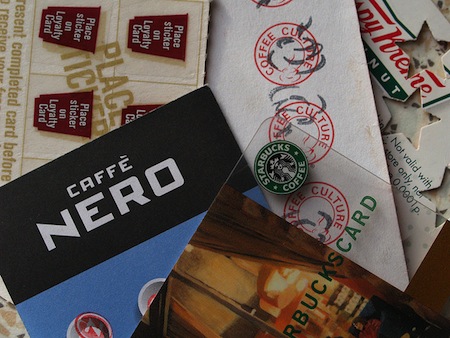
With competition between tourism destinations and businesses standing to grow, organizations are increasingly focusing on retaining existing customers, which is oft less expensive than attracting new ones. This focus forces tourism businesses to await at the customer relationship over the long term, or thecustomer lifetime value (CLV) cycle, rather than at single transactions only.
It has been proven that it is much less expensive for a company to retain an existing customer than larn a new one (Beaujean, Davidson & Madge, 2006). Ultimately, successful organizations will strive to build a base of loyal customers who will provide echo business and may influence other potential customers. Building positive relationships with loyal customers requires planning and diligence for all customer touch points. This may include (Lovelock & Wirtz, 2007):
- Managing service encounters: preparation staff to provide personal service to customers
- Providing customer incentives: inducing customers to frequent the business concern
- Providing special service options: offer enhanced services or extra offerings to loyal customers
- Developing pricing strategies to encourage long-term use: offer repeat customers special prices or rates
- Maintaining a customer database: keeping an up-to-engagement set of records on client purchase history, preferences, demographics, and and so on.
- Communicating with customers: reaching individual customers through directly or specialized media, using non-mass media approaches
Loyalty programs pull together several of these elements to help a business identify, maintain contact with, and reward frequent customers.
Examples of Outstanding Service
If one uses the definition of quality in service as "coming together or exceeding customer expectations" (Kapiki, 2012), then the following examples certainly fit the clarification. These embody a concept known every bit a moment of truth (Beaujean, Davidson & Madge, 2006) when a client's interaction with a front-line employee makes a critical difference in his or her perception of that company or destination. The characteristics of employees that are all-time able to create these moments include self-empowerment and self-regulation, a positive outlook, awareness of their feelings and the feelings of others, and the ability to curb fright and anxiety while existence able to access a want to assist others. These past winners of the WorldHost customer service accolade demonstrate this concept in action (WorldHost, n.d.):
Tamara Turcotte of the Sidney Airport Travelodge was nominated afterwards she came into work on her 24-hour interval off afterwards hearing that hundreds of travellers had been stranded later on a bomb threat led to the cancellation of ferry trips from nearby Swartz Bay. Reporting for duty, she helped coordinate accommodations for these travellers, looking beyond the hotel (which was total) to the homes of coworkers and friends. Her pity and swift actions helped turn a negative experience for these guests into a moment of truth nearly visiting British Columbia.
Agazzi Abbay received discussion that JetsGo, a small airline and his employer, had suddenly gone out of business, and he was out of a task. Concerned for the passengers that would be stranded by this sharp end for the airline, he went to the airport to give them the opportunity to share their frustration. Fifty-fifty though he was unable to help their situation, he was able to demonstrate empathy and provide a listening ear as the only quondam JetsGo employee available across Canada.
Andrea Chan, a guest services supervisor at the Holiday Inn and Suites in Vancouver, received a call from a hotel invitee who said she was ill. Concerned because the caller sounded disoriented, Andrea recommended a visit to the hospital. To exist sure her guest was rubber, Andrea accompanied her to the emergency room and stayed with her until her wellness and safe were assured — working well beyond the hours of her shift, and returning home the adjacent morning. By treating every guest like family unit, Andrea created a lasting impression about Holiday Inn and its customer service values.
Of course, it's not possible for every customer encounter to be positive. Let's look at what happens when a customer encounter does non get well, and what can be done nearly information technology.
Recovery from Service Failures

If a business organization fails to run into client expectations, there's a run a risk the customer will tell others about it, often through social media networks. An on-location problem that turns into an online complaint, going from individual to public, can become far more dissentious to business organisation than the original issue. To avert any problem from escalating, organizations and staff must work hard to resolve issues before the customer walks out the door — or pulls out a smartphone to make an online posting.
Of course, information technology'southward not always possible to resolve issues on the spot. A customer's expectations may go across the service the business is able to provide, or staff might not be authorized past management to provide the means necessary to resolve the complaint. In these cases, staff must notwithstanding step up as service professionals, realizing that the deportment they take when faced with a complaint can have a significant touch.
Online complaints highlight this point; reviewers are often more upset about how a trouble was handled than about the problem itself. As well, potential guests who read online complaints are looking for reassurance that the same thing won't happen to them. If they don't detect information technology, they may dismiss the business organization as an option and movement on. How a business handles complaints, confront-to-face up and online, is critical to ensuring successful recovery from service failures.
Service recovery occurs when a customer service professional takes action that results in the client being satisfied after a service failure has occurred. Often service failures are not the fault of forepart-line staff, and at times, may not even be the fault of the business organisation. Failure may be the effect of an mistake made past another employee, past the guest him- or herself, or by a technical error. Regardless of where the problem originated, when customers bring it to the attention of the staff, they have certain expectations for resolution.
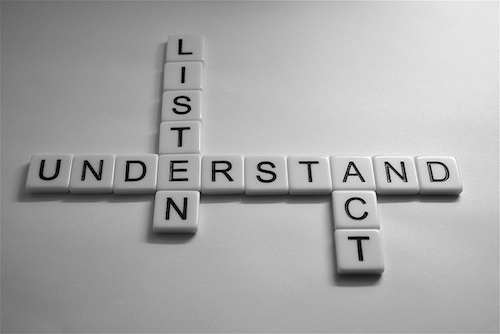
Disappointed customers often want:
- An empathetic ear. Sometimes they simply want to vent. They want to know that the employee or manager is listening and cares.
- An amends. In some cases a sincere apology is enough.
- A solution. Typically customers bring issues to the attention of staff considering they want them stock-still.
- Compensation. Upset customers are looking for compensation, but non always.
- Follow-upwardly. For some people, it's of import to know that their concerns are brought to the attention of management and are fixed for future customers.
- Reassurance. Customers want to know they're in good hands.
Skilled service recovery is especially important in the historic period of social media. Customers who are active on social networks are probable to be every bit vocal virtually their satisfaction with service recovery when a problem is expertly handled as they are with their displeasure when they are disappointed with service (WorldHost Training Services, 2013).
While service recovery is a critical skill, all tourism and hospitality professionals should approach each meet with the goal of providing remarkable service. The side by side section explores how this is accomplished.
Exceeding Expectations with Remarkable Service
Nosotros've discussed the basic ingredients of meeting customer expectations. Notwithstanding, for a business to exist successful, it'due south important to not but see, just exceed, expectations. Remarkable service doesn't necessarily require a great deal of cost, time, or resource. Oft information technology's the little details, the special attention from employees and the personalized touches that people recollect nigh. At that place is no formula for remarkable service. Information technology will depend on the type of customers, the nature of their visit, and the things they value. Finding ways to provide remarkable service requires back up from direction, keen observation skills, and a willingness to "get the extra mile" (Destination BC, 2013).
Providing practiced service is about agreement, recognizing, and anticipating the needs of customers and working hard to encounter or exceed them. The cadre service essentials are also elementary: brand eye contact, grin, greet warmly, and utilise the customer'southward name. These simple actions tell customers that your system values them and is eager to assistance. In social club to exceed expectations, your arrangement must exist on the alert for opportunities to provide remarkable service (WorldHost Preparation Services, 2013).
The Role of Service and Social Media in Customer Satisfaction
While the basics of great service haven't changed, social media and networking have raised the stakes in the service industry. The cost of a negative feel is college — but and so is the value of a positive feel. In fact, the opportunities of social media reviews and ratings far outweigh the risks.
Businesses that have time to "listen" to social media are going to be more successful at leveraging the ability of online interactions. These companies effectively read review sites such as TripAdvisor, Yelp, and others and respond to guest comments both practiced and bad.
Many factors contribute to how people charge per unit businesses, including value, quality, and convenience. More than anything, however, service influences customer impressions. Whereas a lapse in quality or convenience tin exist overcome with fantabulous service, it is especially challenging to overcome the effects of bad service.
Take a Closer Look: Remarkable Service in the Age of Social Media
This WorldHost Training Services video introduces the concept of remarkable service and what it means for the manufacture today: Remarkable Service – Social Media Administrators: https://www.youtube.com/lookout man?v=2q471_ano2E&feature=em-share_video_user
Now that we have a deeper understanding of the fundamentals of customer service, maintaining positive relationships with our guests and aiming to exceed their expectations, let's look at some organizations that support the training and development of the industry.
Tourism and Hospitality Human Resource Back up
A number of organizations back up the training, development, and credentialling of tourism and hospitality professionals at both the national and provincial level.

Human being Resource Councils
At the national level, the Canadian Tourism Human Resource Council (CTHRC), a national sector council, is responsible for best practice research, preparation, and other professional development back up on behalf of the 174,000 tourism businesses and the 1.75 million people employed in tourism-related occupations beyond the country. Provincially, the organization go2HR serves to educate employers on alluring, grooming, and retaining employees, likewise as hosts a tourism job board to match prospective employees with job options in tourism effectually the province.
Preparation Providers
Throughout this textbook, yous'll see examples of not-for-profit industry associations providing training and certification for manufacture professionals. For example, the former Canadian Found of Travel Counsellors (CITC) is now hosted by the Association of Canadian Travel Agents and continues to offer a full-time and distance program to train for the occupation of Certified Travel Counsellor. Closer to home, WorldHost Training Services, a division of Destination BC, offers earth-course customer service grooming.
Educational Institutions
British Columbia is habitation to a number of high-quality public and private colleges and universities that offer tourism-related educational options. Training options include certificates, diplomas, and degrees in take a chance tourism, outdoor recreation, hospitality management, and tourism management. Whether students are learning how to manage a restaurant, gaining mount take chances skills, or exploring the earth of outdoor recreation and tourism management, tomorrow'due south workforce is existence prepared by skilled instructors with solid industry experience.
Through these educational opportunities, tourism professionals can earn a range of credentials and certifications that not only heave their confidence, but have proven benefits to employers seeking fresh ideas and potential leaders for their organizations.
Determination

BC tourism and hospitality employers named customer service as the well-nigh beneficial training topic in a number of surveys. These skills are integral to customer satisfaction, employee engagement, organizational performance, and a destination'southward competitive position (Freeman, 2011; Tourism Vancouver Island, 2010).
Employers tin can either commit to creating a learning organization or undermine their business depending on their investment (or lack thereof) in training. Essentially, employers get out of training what they put into it, often past alluring and retaining amend, more motivated employees. Ultimately, this investment results in a better customer experience with improved levels of customer loyalty and organizational profitability. Prudent employees seek employers who value investment in preparation.
We know at that place are a variety of ways to ensure quality of service and recover when things go incorrect. A fundamental factor of success is understanding that customers want to be listened to — they would like an apology, a solution, at times compensation, and often follow-upward and reassurance. And when a complaint is expertly handled, the client can be converted from a potential social media detractor to a loyal advocate for the concern.
From the first moving ridge of training that prepared BC to host Expo 86, to communities and businesses participating in WorldHost workshops today, tourism in our province is only as strong as the front-line employees that evangelize experiences to guests.
Another key component in BC's power to compete as a tourism destination is its reputation for healthy wild fauna, wild viewscapes, and pristine resources. Chapter 10 highlights the of import function the tourism industry can play in either preserving, or damaging, our natural assets.
- Client lifetime value (CLV): a view of customer relationships that looks at the long-term cycle of customer interactions, rather than at single transactions
- Customer orientation: positioning a concern or organization then that customer interests and value are the highest priority
- Customer human relationship management (CRM): a strategy used past businesses to select customers and to maintain relationships with them to increase their lifetime value to the business
- Loyalty programs: programs that identify and build databases of frequent customers to promote directly to them, and to advantage and provide special services for those frequent customers
- Moment of truth: when a customer'southward interaction with a forepart-line employee makes a disquisitional difference in his or her perception of that visitor or destination
- Service recovery: what happens when a customer service professional takes actions that result in the customer existence satisfied after a service failure has occurred
- SERVQUAL: a technique developed to measure service quality
- Total quality (TQ): integrating all employees, from direction to front-level, in a procedure of continuous learning, which leads toward increasing customer satisfaction
- Total quality management (TQM): a process of setting service goals as a team
- Complete the Remarkable – You lot! Checklist for Service Professionals (WorldHost Training Services, 2013). On a scale of 1–5 (with five being highest) charge per unit yourself on the following customer service skills. You tin utilise a recent customer interaction or one from a previous service part. Add whatever other criteria that relate specifically to your position.
| Qualities of a Remarkable Service Professional | Score |
|---|---|
| Treat all colleagues with courtesy and respect. | |
| Treat all customers with courtesy and respect. | |
| Create a positive beginning impression for all customers. | |
| Communicate clearly when sharing directions or information. | |
| Be aware of the impact of voice and trunk linguistic communication during communications. | |
| Apply open-ended questions to clarify. | |
| Listen in an active and engaged way. | |
| Listen without judgment to gain understanding. | |
| Demonstrate empathy to customers. | |
| Take initiative to deal with challenging situations. | |
| Solve problems effectively. | |
| Speak highly of the organization'due south products and services on a consistent footing. | |
| Provide positive recognition to customers. | |
| Provide constructive feedback using assertive language. | |
| Wait for ways to improve as a client service professional on an ongoing basis. | |
| Look for means to provide remarkable, out-of-the-ordinary service on an ongoing footing. |
2. What are three key benefits of customer service training for employers? What are iii benefits to employees?
3. Identify and talk over three means that tourism and hospitality businesses can maintain a long-term relationship with their guests.
4. What kinds of training and credentials are available to tourism and hospitality professionals? What are some of the benefits to both employees and employers of these credentials?
five. Take a moment to list all of the loyalty programs you belong to (using cards from your wallet or apps on your phone). Next to each, write the post-obit: the reason you joined the program, the benefits you receive from information technology, and your approximate of the benefits the issuing visitor receives.
6. Name 5 instances in which a invitee might interact with each of the post-obit types of tourism and hospitality business:
a. A tour operator
b. A hotel
c. An airline
d. A ski resort
vii. Choose a tourism business, hotel, or restaurant that has received first-class reviews, and determine which comments tin can exist linked either directly or indirectly to the quality and level of employee grooming and client service. Notice at least 1 instance of each of the dimensions of RATER.
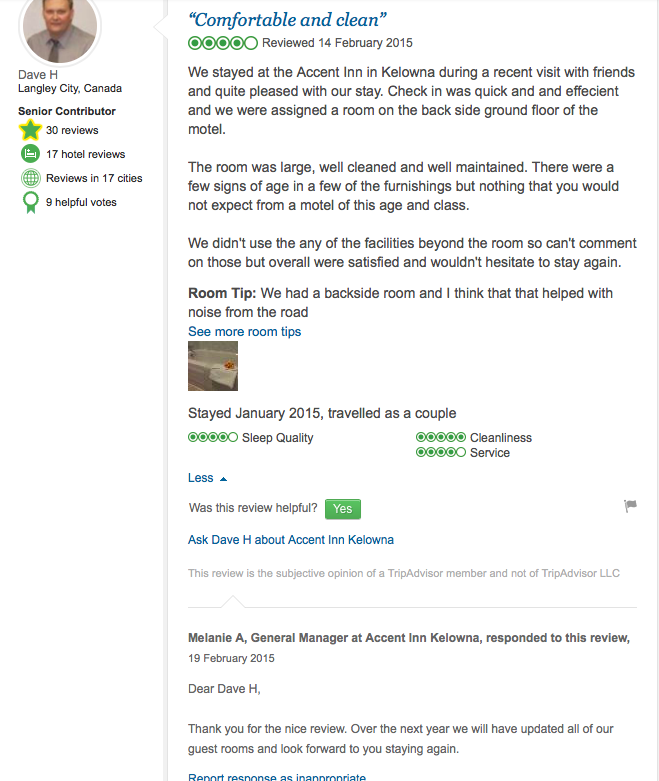
Accent Inns is an award-winning, family-owned and operated visitor based in Victoria with hotels located in Victoria, Richmond, Burnaby, Kelowna, and Kamloops. All Accent Inns have developed a reputation for their quality, reasonable rates, and splendid service. Guest and staff satisfaction are key components of their service civilisation to care for every invitee like family unit. The squad at Accent Inns put great endeavour into making every customer interaction memorable.
In 2013, Accent Inns committed to incorporating customer service training at each belongings to be delivered by Accent Inns assistant full general managers (AGMs). Cadre outcomes were to heighten the level of service, empower front end-line staff with the tools to exceed invitee expectations, and strengthen the facilitation and coaching skills of the AGM team. Edifice on the concern's existing training culture and potent corporate values, WorldHost Training Services created a customized half-day program for the AGMs to use in their hotels.
To prepare, the AGMs completed an experiential ane.5-day railroad train-the-trainer session. An emphasis on coaching back up and a squad facilitation approach led many to gain confidence in this new role. One trainer excelled and was selected as the full-time trainer for Emphasis Inns. Working with the human resources team from Emphasis Inns, WorldHost also completed a needs analysis at each property to ensure staff had input into future training. Training continues to be developed and delivered internally.
According to Kathy Gaudry, human resources director for Accent Inns, "The WorldHost team was fantastic; they worked hard to ensure the training was completely relevant to our employees and our civilisation. The results were phenomenal — our junior leaders have caused the skills they demand to deliver training locally to their own teams — we couldn't be happier."
Visit the Accent Inns website (www.accentinns.com) and review the information to answer the following questions about their customer service civilization:
- What kind of experience do yous wait by reading the website'south information and looking at the pictures? What kind of service practise you feel the inns provide?
- Visit TripAdvisor (TripAdvisor.com) and look up any of the Accent Inn locations.
- Select a review for families. What does the reviewer say about the property? How does Emphasis Inns respond?
- Select a review for solo travellers. What does the reviewer say well-nigh the property? How does Accent Inns respond?
- Are there whatsoever negative reviews? If so, how does Accent Inns respond?
- Now that you've reviewed the case study, the website, and TripAdvisor for Emphasis Inns, utilize the RATER dimensions to provide examples of how Accent Inns is using the SERVQUAL model.
References
Beaujean, M., J. Davidson, & Madge, Due south. (2006). The 'moment of truth' in customer service. Retrieved from www.mckinsey.com/insights/organization/the_moment_of_truth_in_customer_service
Blanke, J. & Chiesa, T. (Eds.). (2009). The Travel and tourism competitiveness study: Managing in a time of turbulence. Globe Economic Forum, Davos, p. 525. Retrieved from: www.weforum.org/reports/global-competitiveness-study-2009-2010
Chocolate-brown, J., Elliott, South., Christensen-Hughes, J., Lyons, S., Isle of man, S., & Zdaniuk, A. (2009). Using human being resource management (HRM) practices to meliorate productivity in the Canadian tourism sector. Department of Business, University of Guelph, Canadian Tourism Human Resource Council. Retrieved from
http://cthrc.ca/~/media/Files/CTHRC/Dwelling house/research_publications/productivity/HRM_Practices_Improve_ProductivitySept_EN.ashx
Canadian Tourism Commission (CTC). (n.d). Canadian Signature Experiences. Retrieved from http://en-corporate.canada.travel/resources-manufacture/canadian_signature_experiences
Cornell Hospitality Research. (2012). Summit 2012: Edifice service excellence for client satisfaction. Retrieved from www.hotelschool.cornell.edu/research/chr/pubs/roundtableproceedings/roundtable-17003.html
Destination BC. (2013) Remarkable service in the age of social media (video). WorldHost Training Services. Retrieved from www.youtube.com/lookout?v=2q471_ano2E&feature=em-share_video_user
Destination BC. (2014)Remarkable experiences programme. Retrieved from: http://strategy.destinationbc.ca/how-we-will-win/foster-remarkable-experiences/remarkable-experiences-program/
Erdly, M. & Kesterson-Townes, L. (2002). Experience rules, IBM Business organization Consulting Services' vision for the hospitality and leisure industry. IBM Business Consulting Services.
Freeman, R. (2011). Vancouver Island and the Sunshine Declension tourism and hospitality sector client service grooming and needs assessment study. Nanaimo, BC: Vancouver Island University.
Grey, A. (2006). Upskilling through foundation skills: A literature review. [PDF] Report prepared for the Department of Labour. New Zealand. Retrieved from www.dol.govt.nz/PDFs/upskilling-through-foundation-skills.pdf
Kapiki, S. (2012) Quality direction in tourism and hospitality: An exploratory report among tourism stakeholders. Retrieved from www.academia.edu/1160667/Quality_Management_in_Tourism_and_Hospitality_an_Exploratory_Study_among_Tourism_Stakeholders
Kim B. (2008). Mediated effects of customer orientation on client relationship management performance. International Journal of Hospitality & Tourism Administration, 9(2), 192-218.
LinkBC. (2014). LinkBC roundtable 2014: Dialogue cafe. [PDF] Retrieved from http://linkbc.ca/siteFiles/85/files/2014RoundtableDialogueCafeReport.pdf
Lovelock, C. & Wirtz, J. (2007). Services marketing: People, applied science, strategy [PDF] (sixth ed.). Upper Saddle River, NJ: Pearson Prentice Hall. Retrieved from http://bschool.nus.edu.sg/Departments/Marketing/Jochen%20papers/sm6coverloyalty.pdf
Masberg, B., Hunt, D., & Madlem, G. (2003). A Delphi study of tourism training and pedagogy needs in Washington State. Periodical of Human Resources in Hospitality & Tourism, ii(ii), 1. doi:ten.1300/J171v02n02•01.
Morrison, A. M. (2010). Hospitality & travel marketing (fourth ed., International ed.). Clifton Park, NY: Delmar Cengage Learning.
Saunders, R. (2009). Employer investment in workplace learning [PDF]. Canadian Policy Research Networks. Retrieved from www.ccl-cca.ca/pdfs/WLKC/EmployerTrainingInvestment_FinalSynthesisReport_EN.pdf
Service Skills Australia. (2015). About. Retrieved from www.serviceskills.com.au/about
Tourism Vancouver Isle (TAVI). (2010). 2010 Grooming and needs assessment survey [PDF]. Retrieved from: www.tourismvi.ca/research/pdf/2010-Training-and-Education-Needs-Cess-Survey.pdf
WorldHost Grooming Services. (n.d.). WorldHost: Hall of fame. Retrieved from www.worldhosttraining.com/halloffame/
WorldHost Grooming Services. (2013). Remarkable service in the age of social media. Retrieved from www.worldhosttraining.com/elearning/
Attributions
Figure nine.1 Family Checking In – WorldHost by LinkBC is used under a CC By-NC-ND ii.0 license.
Figure nine.2 Adult female on Headset – WorldHost past LinkBC is used nether a CC By-NC-ND 2.0 license.
Figure 9.3 huh? past Liz is used under a CC Past-NC 2.0 license.
Figure 9.4 Happy Birthday from Mom past Peter Lee is used under a CC By-NC 2.0 license.
Figure 9.5 1954- Service by James Vaughan is used under a CC BY-NC-SA ii.0 license.
Effigy 9.6 new currency by Roy is used under a CC By-NC-SA 2.0 license.
Effigy 9.7 Complaints button by SEO is used under a CC BY SA ii.0 license.
Figure 9.8 Listen, Understand, Act by Stephen Shorrock is used nether a CC Past-NC-SA 2.0 license.
Figure 9.9 Welcome to Vancouver 2010 by roaming-the-planet is used under a CC Past-NC-ND 2.0 license.
Effigy ix.ten Emphasis Inns Online Review past LinkBC is used nether a CC BY two.0 license.
Figure 9.11 Man on Blackberry – WorldHost by LinkBC is used under a CC By-NC-ND two.0 license.
Long Descriptions
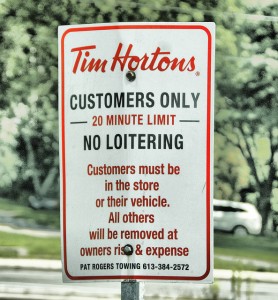
Effigy 9.iii long description: A sign saying, "Tim Hortons customers only. 20 minute limit. No loitering. Customers must be in the store or in their vehicle. All others will be removed at owners risk and expense. [Render to Figure ix.iii]
Figure 9.10 long description: A customer gives a fairly positive review but comments on the older piece of furniture. The director thanks him for his review and adds that they volition be updating the furniture and hopes he volition stay again. [Return to Figure 9.x]

Which Of The Following Is An Example Of A Special Request In Advance Of Service Delivery?,
Source: https://opentextbc.ca/introtourism/chapter/chapter-9-customer-service/
Posted by: baxterfortits64.blogspot.com
0 Response to "Which Of The Following Is An Example Of A Special Request In Advance Of Service Delivery?"
Post a Comment